I want to address some misinformation about immigrants/asylum seekers/refugees and what the law actually says. False claims can fuel division and distract from the real experiences of people rebuilding their lives after conflict, violence or persecution.
Misinformation can contribute to fear/hatred than can lead to unfortunate harm our community like the recent arrests that we have seen.
As a Member of Parliament for a decade now, one part of my responsibility has been to help constituents who are seeking asylum to contact the Home Office so their cases can be reviewed. Over the years, I have heard many moving and incredibely kind accounts from people who felt forced to flee persecution and
start again here.
……………….
Who are we talking about and what do the terms actually mean?
* Migrant / immigrant – A migrant is anyone who moves from one country to another to live, work, study or join family. People sometimes say “legal” or “illegal” migrant, but in law the key question is whether someone has permission to enter or remain. Migrants make significant contributions to the UK, including filling skills gaps, starting businesses and paying taxes.
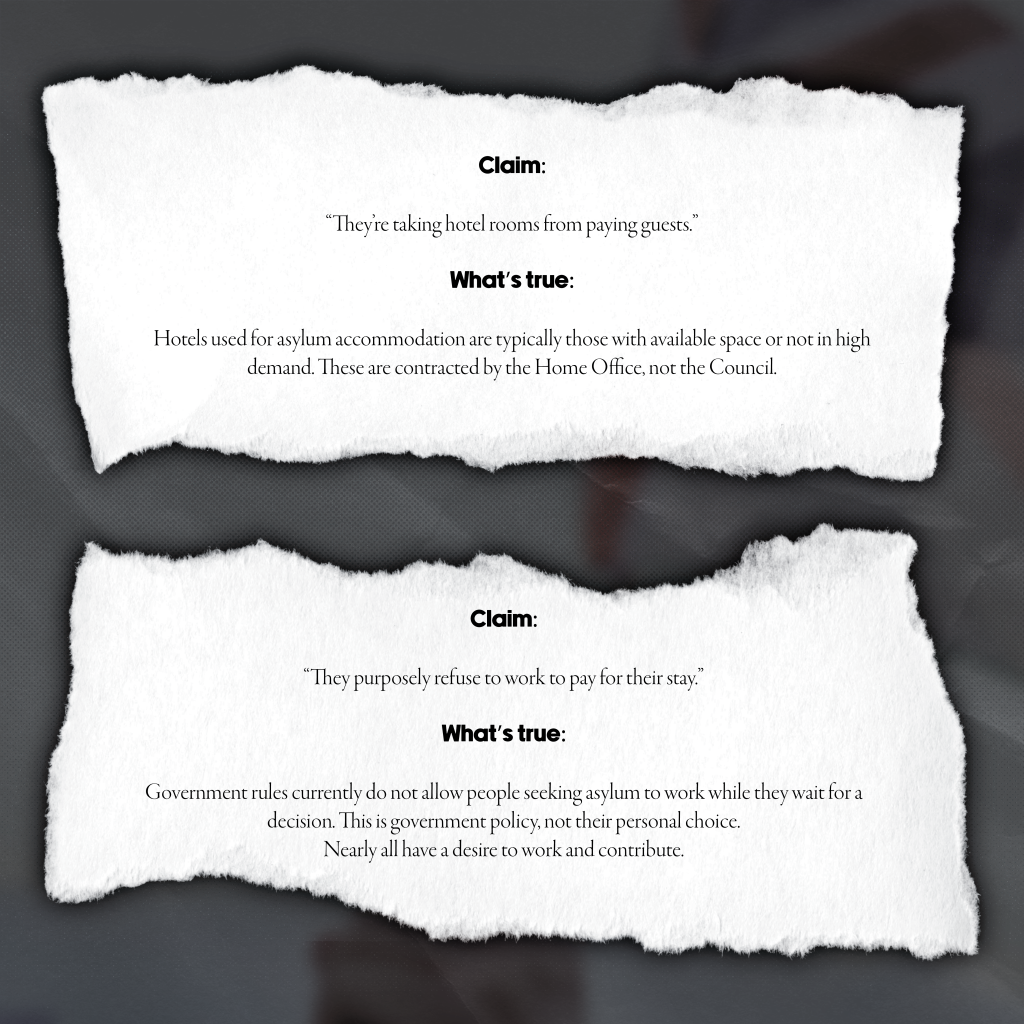
* Asylum seeker – An asylum seeker is someone who has left their country and asked the UK for protection because they fear persecution, war or serious harm. They are waiting for a government decision on that claim. While waiting, they generally cannot work. After 12 months, if a decision has not been made through no fault of the applicant, they can apply for permission to work, usually only in roles on the government’s shortage list.
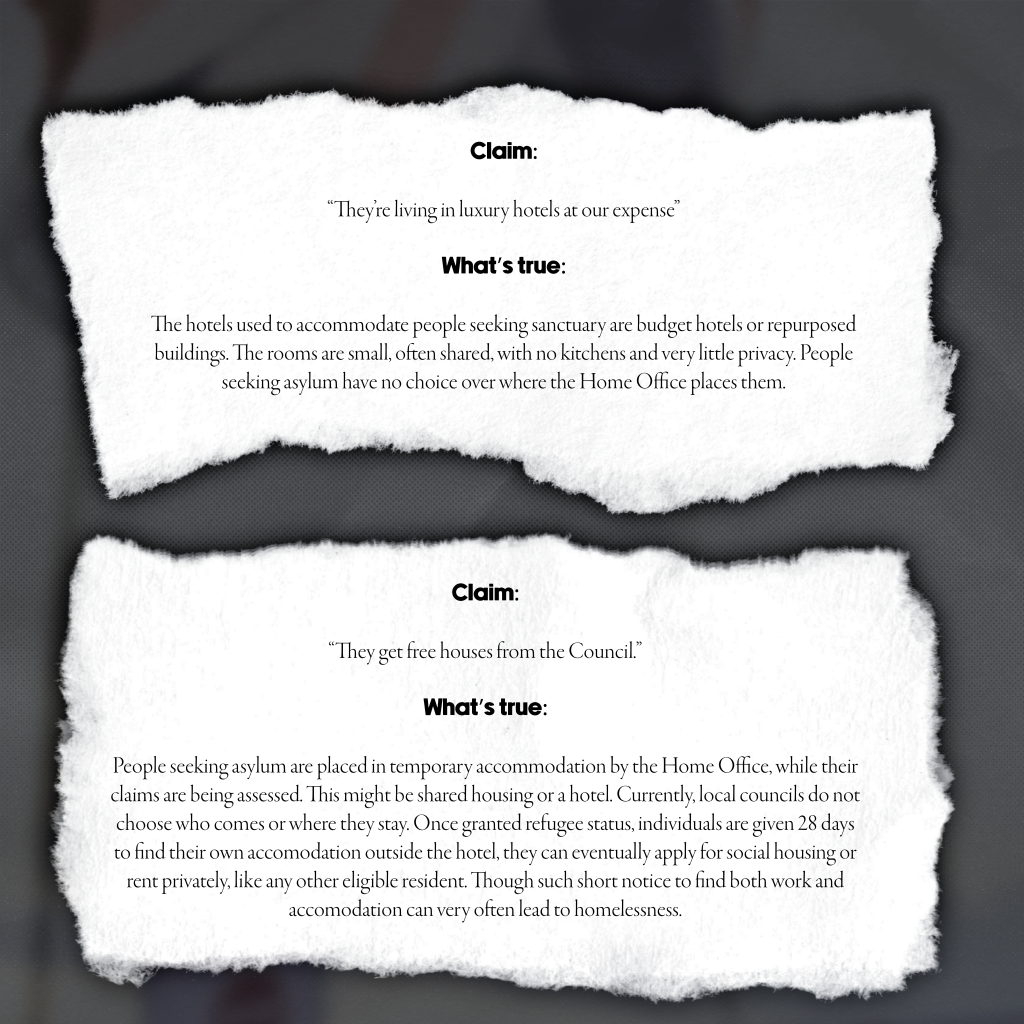
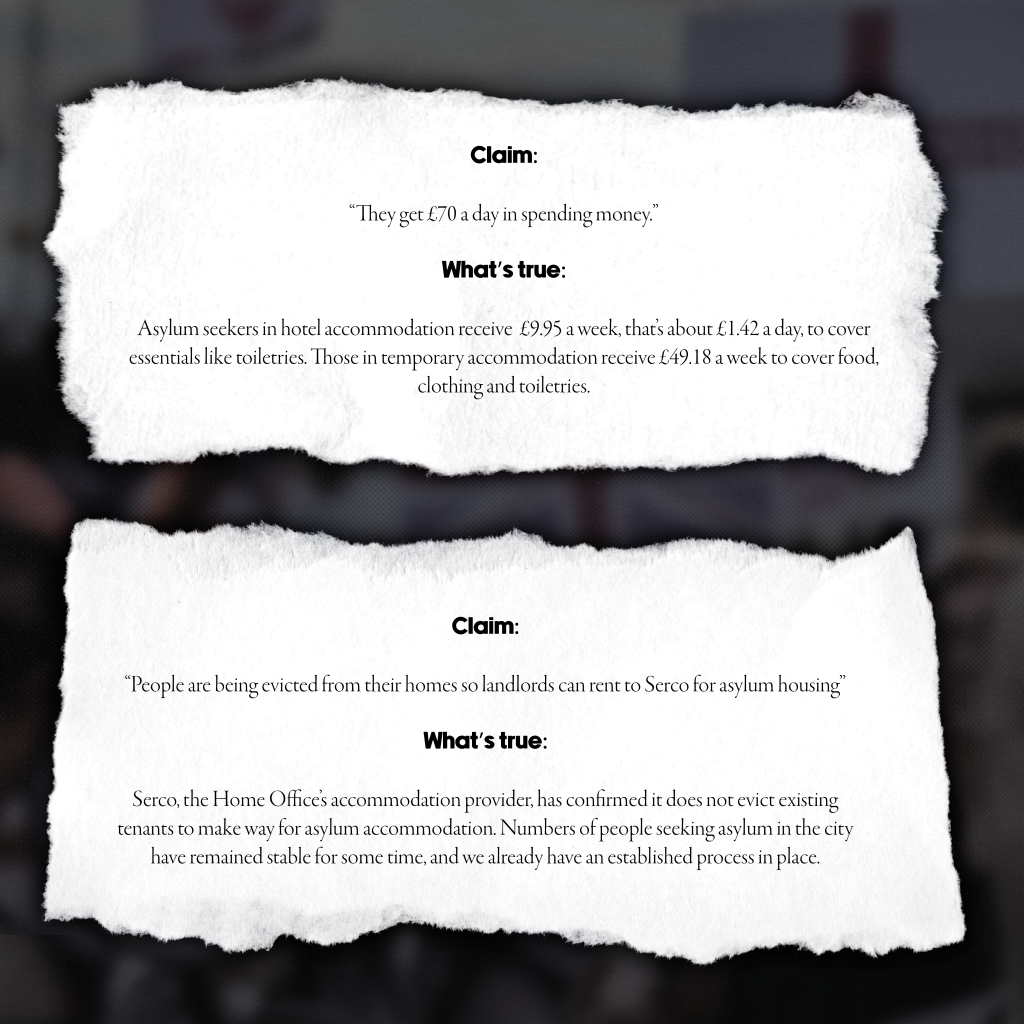
People seeking asylum are usually housed in Home Office-arranged accommodation, which can include dispersal housing and, at times of pressure, hotels. Successive governments have said the use of hotels is temporary and have sought to reduce reliance on them.
* Refugee – A refugee is someone whose asylum claim has been accepted because they meet the definition in the Refugee Convention. Refugees have permission to live and work here and to access services, typically with an initial period of leave followed by a route to settlement.
……………….
“Illegal” vs “irregular”
You will see different words used.
* Relevant international organsations correctly use the term “irregular,” because seeking asylum, including by irregular routes (including small boats), is not in itself a crime under international refugee law. UK law also recognises defences for refugees related to their irregular entry, reflecting Article 31 of the Refugee Convention.
* In everyday discussion, “illegal” is often used to describe someone without permission to enter or stay. In UK law there are offences linked to entering or remaining without leave, although there are important protections for people seeking asylum.
It is important to clarify that those who stay in hotels are not “illegal”, as they will have made themselves aware to the Government and are being supported until a decision has been made on their claim.
……………….
Please keep in mind
* It is not a crime simply to ask for asylum. People may arrive by irregular routes and still be protected while their situation is assessed. UK law provides specific protections for refugees in these circumstances.
* While an asylum claim is under consideration, people are here lawfully for that purpose. They usually cannot work, but after 12 months without a decision they can apply for permission to work, typically in shortage listed roles.
* The Home Office provides accommodation and support for eligible asylum seekers. The Government has committed to reducing hotel use as capacity improves.
Please find some further clarification on specific misconceptions in the graphic below, many of which are courtesy of Liverpool City Council, also accessible with further reading via this link.